about
deeley.org
Accessibility note: This site includes flashing and strobing light effects. If you are sensitive to these effects, please do not continue. Individual project pages may also include additional content warnings where needed.
Thank you for visiting. My name is Alex Deeley. I am a legally blind artist based in the Pacific Northwest.
I have retinitis pigmentosa, and my vision shapes the way I work. Much of what I create relies on contrast, saturation, movement, and visual intensity. My work often explores what remains visible, what breaks apart, and what demands attention when sight is partial, unstable, or changing.
This site is an active workspace as much as a portfolio. Some projects are complete, some are still developing, and some may not work as intended. I’ve left that visible on purpose. Experimentation, revision, and failure are all part of the process.
Projects are organized by category in the menu on the main page. Most of the apps and interactive pieces here are designed to work on both mobile phones and desktop computers.
This usually takes the longest. Inspiration can come from another artist’s work, from natural forms like water or weather, or from ordinary visual patterns such as passing traffic, reflected light, repetition, or motion. I’m often interested in translating these experiences into something more graphic, exaggerated, or immersive.
Once I know the direction I want to explore, I choose the tools that best fit the project. For many recent works, that process begins with AI-assisted prompt writing. I use ChatGPT to help me structure ideas into detailed prompts that reflect my visual style and accessibility needs, including a preference for bold contrast, strong separation, and other features that work with my eyesight rather than against it.
I then use those prompts in Claude to generate prototypes, code experiments, or interactive pieces. This allows me to move quickly from concept to testable draft.
This is where the real work begins. I treat generated outputs as raw material, not finished pieces. My role is to direct, edit, test, and push the work until it becomes more specific, more intentional, and more fully mine. I often try to find the limits of a tool, system, or visual idea to see what happens when it starts to strain or fail.
Once a piece is close to what I want—or has taken an unexpected turn worth keeping—I save and move it into the environment where I publish and maintain my work. This site also houses several of my other AI-based experiments.
This part changes depending on the project. For music visualizers and video-based work, I often choose sound after the visual concept is already underway. I listen widely until I find something that fits the structure, movement, or mood of the piece.
That might mean fast, nervous electronic percussion for work built around rigid forms and sharp motion, or a quieter and more restrained sound for something slower, softer, or less defined. I usually do not begin with music first; I build toward it.
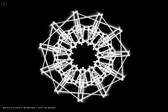
I typically use an iPad and Apple Pencil for graphical work. My main tools include SketchClub, Procreate, and several custom-built apps that help me generate or repeat specific forms, patterns, and visual behaviors. Some of those tools are available on this site under the Art section.
I’ve been making music as a hobby since I was a teenager. I’m not committed to one genre and prefer to move between different approaches to rhythm, melody, structure, and texture.
Depending on the kind of piece I’m making, I begin in different places. For more traditional song-based work, I often start in GarageBand and export through DistroKid.
I also use Suno AI as part of my process. As with app development, I use AI tools to help translate rough ideas into structured prompts, which can lead to results that are unpredictable, strange, or unexpectedly useful.
I also build my own instruments, synthesizers, drum machines, and looping tools.
Thank you for spending time here.
I hope the work on this site offers a clearer sense of how I make art, how I use technology, and how disability informs the way I see, choose, and build.
— Alex
Substack
@alexdeeley
@_alexs_art_alt_
© 2026 Alex Deeley 